Engineering Approach in IT Projects: Why Architecture Matters More Than Design
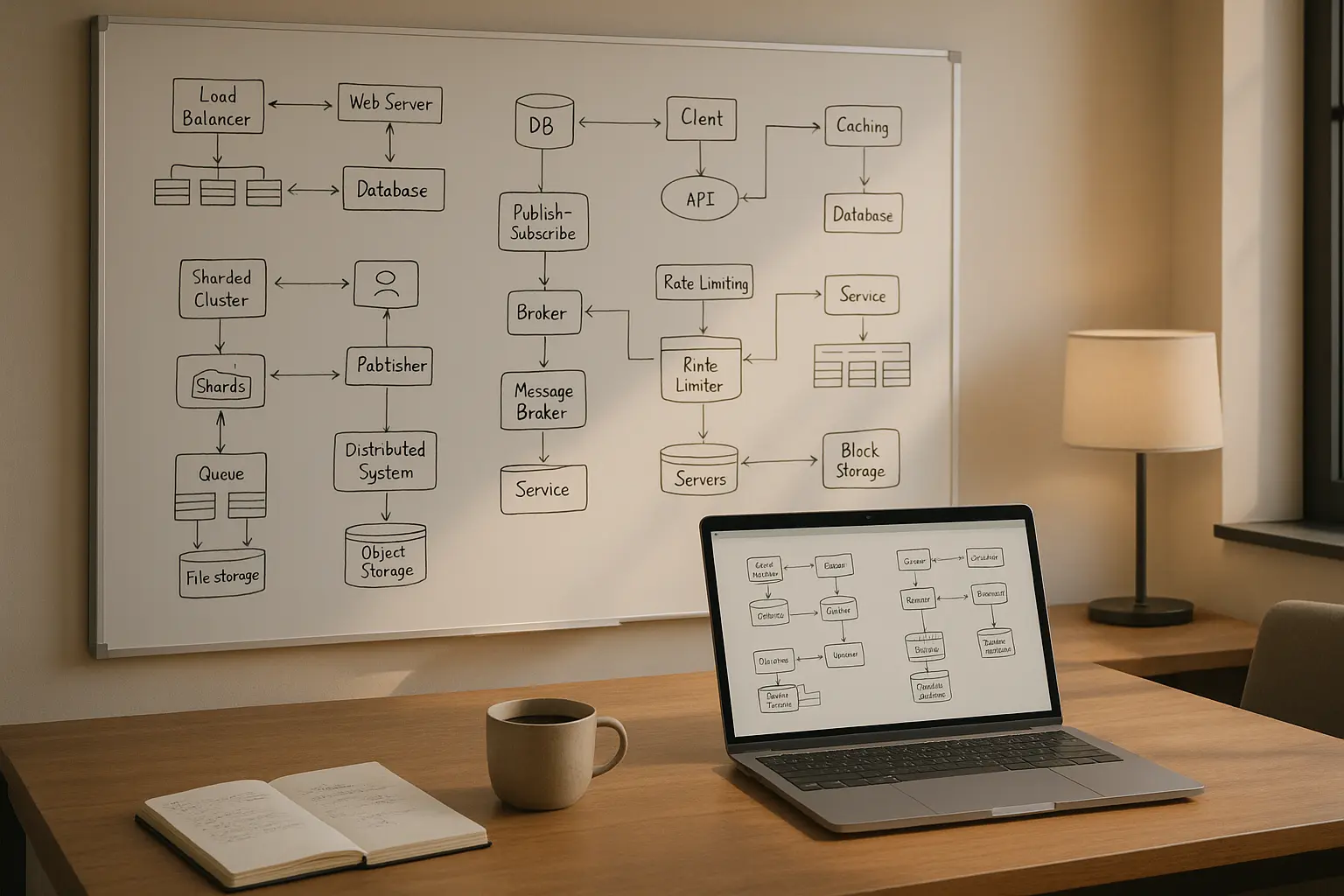
Most business software projects begin with a picture. A founder sketches a few screens, a designer turns them into a polished prototype, and stakeholders approve the colors, the logo placement, and the flow of buttons. It feels like progress because it is visible. But this visible layer is only the surface of a product. Underneath it sits the architecture — the structural decisions that determine whether the system will survive its second year, its tenth integration, and its hundredth thousand records. At OneDev we have repeatedly seen projects in Uzbekistan and the wider region stall not because the design was wrong, but because the engineering foundation was never seriously considered.
This article explains what an engineering approach to software actually means, why architecture deserves more attention than the interface in the early phases, and how a business or government customer can recognize whether their contractor is building a real system or just a convincing demo.
Design Is What Users See, Architecture Is What Lets Them Keep Seeing It
Design and architecture are often confused because both are called "how the product is built." In reality they answer different questions. Design answers: what does the user perceive and how do they interact with it? Architecture answers: how is the system structured so that it stays correct, fast, secure, and changeable as requirements grow?
A beautiful interface sitting on a weak architecture is like a well-furnished apartment in a building with no foundation. Everything looks ready for guests until the load increases. The moment you add a second integration, a reporting module, role-based access, or a tenfold rise in users, structural shortcuts begin to surface as bugs, slowdowns, and outages. These problems rarely appear in the demo. They appear in production, in front of real users, when the cost of fixing them is highest.
This is why the sequence matters. Visual concepts are cheap to change. Architectural decisions are expensive to reverse. Treating the prototype as the project, and the architecture as a detail to "figure out during development," inverts the real risk profile of software.
What an Engineering Approach Actually Includes
An engineering approach is not a single document or a buzzword. It is a discipline applied before and during construction. In practice it covers a defined set of concerns that a serious team addresses explicitly rather than by accident:
- Data model. How entities relate, what is the single source of truth, how records are identified and never silently duplicated. Most long-term pain in business systems is data-model pain.
- Boundaries and modularity. Which parts of the system can change independently, where the seams are, and how modules communicate so that one change does not ripple unpredictably across the codebase.
- Integrations. How the system talks to payment providers, tax and government services, messaging channels, and third-party APIs — including what happens when those services are slow, fail, or change their contract.
- Security and access control. Who can do what, how sensitive data is stored and transmitted, and how the system behaves under abuse, not just under polite use.
- Scalability and performance. Whether the design holds at expected load, where the bottlenecks will be, and what can be scaled without a rewrite.
- Observability and recovery. Logging, monitoring, backups, and the ability to answer "what happened and why" after an incident instead of guessing.
None of these are visible in a mockup. All of them decide whether the product is maintainable. An engineering approach simply means making these decisions consciously, documenting the reasoning, and revisiting them as the project evolves.
Why "Design First, Architecture Later" Costs More
The appeal of design-first is psychological. A prototype is something everyone can evaluate. Architecture is invisible to non-engineers, so it is easy to assume it will sort itself out. But software has a property that physical construction makes obvious and digital products hide: structural changes propagate.
When the data model is wrong, every feature built on top of it inherits the flaw. Reports become unreliable, edge cases multiply, and developers spend more time working around the structure than building on it. This is what teams call technical debt — not messy code in the abstract, but concrete decisions that make every future change slower and riskier. Debt taken early, at the architectural level, compounds the fastest.
There is also a hidden cost in vendor lock and team turnover. A system without clear architecture lives only in the heads of the original developers. When they leave, or when you change contractor, the new team faces a black box. A well-architected system, by contrast, can be read, understood, and extended by people who did not build it. That is a direct business asset, not an engineering luxury.
Design and Architecture Are Not Rivals — Sequence and Weight Are the Point
To be clear, this is not an argument against design. User experience is part of product quality, and a system nobody can use comfortably has failed regardless of how clean its internals are. The argument is about weight and sequence. Architecture should be decided early and treated as the load-bearing layer; design should be free to iterate on top of a stable foundation.
Design-led project: screens approved first, architecture improvised during development, structural problems discovered in production, expensive rework, knowledge trapped in original developers.
Engineering-led project: data model and integrations defined first, design iterated on a stable foundation, problems caught in review before code, predictable cost of change, system understandable by any competent team.
The good news is that the two reinforce each other when ordered correctly. A clear architecture makes the interface cheaper to change, because the rules of the system are explicit. A clear design clarifies requirements, which improves the architecture. The failure mode is not having design — it is letting design substitute for engineering.
How a Customer Can Tell the Difference
You do not need to be an engineer to assess whether your contractor takes architecture seriously. A few practical signals are reliable across projects:
- They ask hard questions about your business rules, edge cases, and growth expectations before quoting — not just about screens and colors.
- They can explain, without jargon, how your data is structured and why, and what happens when an integration fails.
- They talk about non-functional requirements: load, security, backups, and what happens after launch, not only the launch itself.
- They produce documentation and a system you could hand to another team — meaning you are not hostage to a single set of developers.
- They are willing to say no to a request that would damage the structure, and explain the trade-off instead of silently absorbing it as future debt.
For business and public-sector projects in Uzbekistan, where systems often need to integrate with payment infrastructure, tax and government services, and to operate reliably under real regulatory and usage constraints, these signals matter even more. The cost of an architectural mistake in a system that handles money, citizens' data, or compliance is not measured only in developer hours — it is measured in trust and liability.
Conclusion
Design wins the first meeting; architecture wins the next five years. A prototype proves an idea is appealing, but only a sound engineering foundation proves it can be built, maintained, scaled, and trusted. The most economical moment to make architectural decisions is before a single screen is coded — and the most expensive is after launch, when the system is already in production. If you are planning a business or government IT project and want it to last beyond its first release, talk to the OneDev team early. We are glad to review your idea, discuss the data model and integration strategy, and help you build on a foundation that holds.