Digital Transport Systems and Platforms: Development and Operational Experience
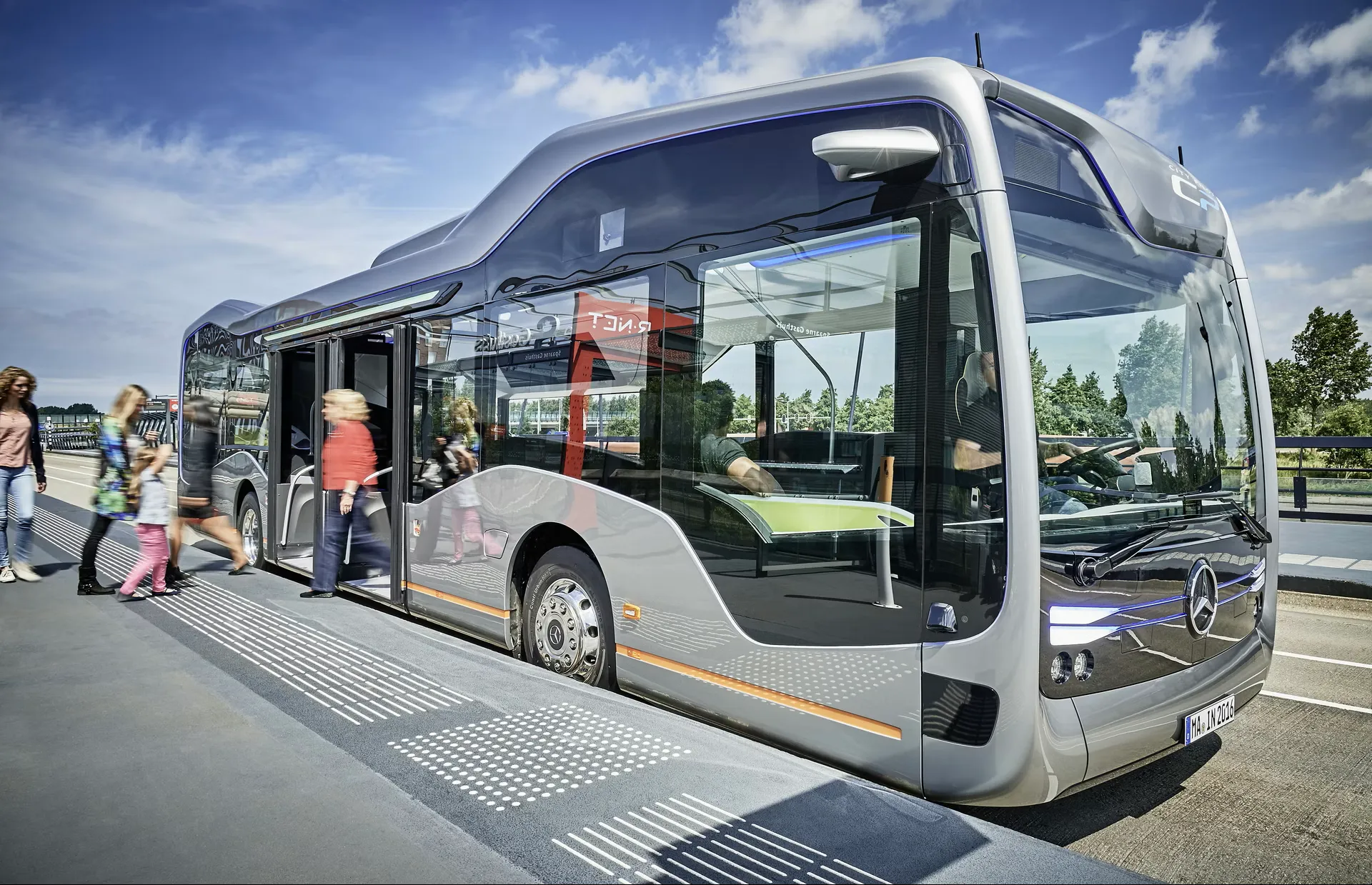
Transport Is Now a Data Problem, Not Just a Fleet Problem
For decades, running urban transport meant managing physical assets: buses, routes, depots, drivers, and timetables printed on paper. That world is gone. A modern transport network generates a continuous stream of data every second a vehicle is moving — GPS coordinates, door open/close events, passenger counts, fuel or battery levels, engine diagnostics, and schedule deviations. The operational question is no longer "where are my buses?" but "can my software ingest, validate, store, and act on millions of events per day without falling behind reality?"
At OneDev we approach transport projects as real-time data systems first and dashboards second. A beautiful map of moving vehicles is only as good as the pipeline feeding it. If telemetry arrives late, gets dropped, or is silently corrupted by a faulty onboard device, every downstream feature — arrival predictions, load balancing, dispatcher decisions — inherits that error. The hard engineering lives in the parts users never see.
The Core Building Blocks of a Transport Platform
Most production transport systems we work on share the same functional layers, regardless of whether the operator runs city buses, intercity routes, or a mixed municipal fleet. Understanding these layers helps a client scope a project realistically rather than buying a single "tracking app" and discovering later that it cannot grow.
- Telemetry ingestion. Onboard units (GPS trackers, validators, sensors) send data over mobile networks. This layer must absorb bursts, tolerate connectivity gaps, and never block when one device misbehaves.
- Data validation and enrichment. Raw coordinates are matched to the road network, snapped to routes, and checked against physical plausibility (a bus cannot jump 5 km in two seconds).
- State and storage. A fast layer holds the current position of every vehicle for live views; a durable layer keeps history for analytics, audits, and dispute resolution.
- Operational logic. Schedule adherence, headway monitoring, arrival prediction, and alerts for breakdowns or route deviation.
- Interfaces. Dispatcher consoles, public passenger apps or boards, and reporting tools for management and regulators.
Each layer has different performance and reliability requirements, and conflating them is one of the most common architectural mistakes we are asked to fix.
Real-Time Means Designing for Unreliable Inputs
The single biggest difference between a demo and a system that survives real traffic is how it handles bad data. In the field, GPS signals reflect off buildings, devices reboot mid-route, SIM cards lose coverage in tunnels and underpasses, and onboard clocks drift. A platform that assumes clean, ordered, on-time data will produce ghost vehicles, phantom stops, and arrival times that erode public trust within days.
We design ingestion to treat the timestamp reported by the device and the timestamp of server receipt as two separate facts. Filtering or displaying data by the device clock alone is dangerous: we have repeatedly seen onboard clocks report times in the future or years in the past. The robust approach is to validate against both, prefer the server-received time for ordering, and flag implausible records rather than trusting or discarding them blindly.
Common mistake: trusting device-reported timestamps and positions without plausibility checks. A single tracker with a wrong clock or jumping coordinates can corrupt arrival predictions for an entire route. Always validate speed, distance-over-time, and clock drift on ingest — and keep the raw record so anomalies can be investigated later, not silently dropped.
Architecture Decisions That Shape Everything Else
Early architectural choices have outsized consequences in transport systems because the data volume only grows. A few decisions deserve explicit attention before any code is written.
Key decision: separate the "live" path from the "history" path. Live vehicle positions need millisecond reads and frequent overwrites — a job for an in-memory or fast key-value store. Historical analytics need durable, queryable storage optimized for time-series aggregation. Forcing one database to do both leads either to slow dashboards or to a history layer that cannot keep up with writes. We typically run the current-state cache and the historical store as distinct systems with a clear handoff.
Another decision is how tightly to couple the public-facing layer to the operational core. Passenger apps and information boards can experience traffic spikes (rush hour, weather events, service disruptions) that have nothing to do with fleet size. Isolating them behind their own read-optimized API protects dispatcher operations from public load, and vice versa.
Polling vs. event-driven updates. A simple system has clients poll the server every few seconds for vehicle positions. This is easy to build but scales poorly: thousands of passengers refreshing simultaneously hammer the backend with redundant requests. An event-driven approach — pushing updates over persistent connections — reduces load and improves freshness, but requires careful connection management (heartbeats, reconnection, cleanup of dead sockets). For small pilots, polling is pragmatic. For city-scale public services, an event-driven layer with proper connection lifecycle handling is worth the added complexity.
Operational Lessons From Running Systems in Real Traffic
Building the system is half the work; keeping it healthy in production is the other half. Transport platforms run 18–24 hours a day, and failures happen at the worst times — during peak load, in bad weather, or when a network operator has an outage. A few operational practices consistently separate reliable deployments from fragile ones.
- Monitor the absence of data, not just errors. The most dangerous failure is silent: ingestion stops, but the dashboard still shows the last known positions and looks fine. We add explicit "no data received in N minutes" alarms per route and per region, because a frozen map is harder to notice than an error message.
- Plan for backpressure. When a downstream component slows down, the ingestion layer must buffer and degrade gracefully rather than crash. A queue between ingestion and processing absorbs spikes and outages.
- Keep raw history. Regulators, accident investigations, and billing disputes all require provable historical records. Aggregated summaries are not enough; the raw event log is the source of truth.
- Make deployments boring. Versioned releases, the ability to roll back quickly, and health checks on every service mean a bad update does not take the whole city's transport visibility offline.
For public-sector and municipal clients in particular, we treat auditability and data retention as first-class requirements, not afterthoughts. The ability to answer "where was vehicle X at 14:32 last Tuesday?" with confidence is often a contractual and legal necessity.
Scaling Without Rebuilding
A pilot with 50 vehicles and a network with 5,000 vehicles are different engineering problems, but a well-designed system should let you grow between them without a rewrite. The key is to avoid assumptions that hold only at small scale: single-server databases, synchronous processing of every event, and per-client polling. We recommend starting with an architecture whose components can be scaled independently — ingestion, processing, storage, and APIs — even if the initial deployment runs them modestly. This is cheaper than a rebuild and lets the system follow the operator's growth rather than constrain it.
Conclusion
Digital transport platforms succeed or fail on the unglamorous fundamentals: handling unreliable telemetry, separating live state from history, monitoring for silence as well as errors, and designing for the scale you will reach, not just the one you start with. The map and the mobile app are the visible 10%; the resilient data pipeline underneath is what keeps a city's transport information trustworthy day after day. If you are planning a transport monitoring, dispatch, or passenger-information system — or improving one that is straining under real traffic — the OneDev team would be glad to discuss your goals, constraints, and existing infrastructure, and to map out a realistic path from pilot to production.