Computer Vision and Video Analytics: Applications in Uzbekistan
What video analytics is and why it isn't "just more cameras"
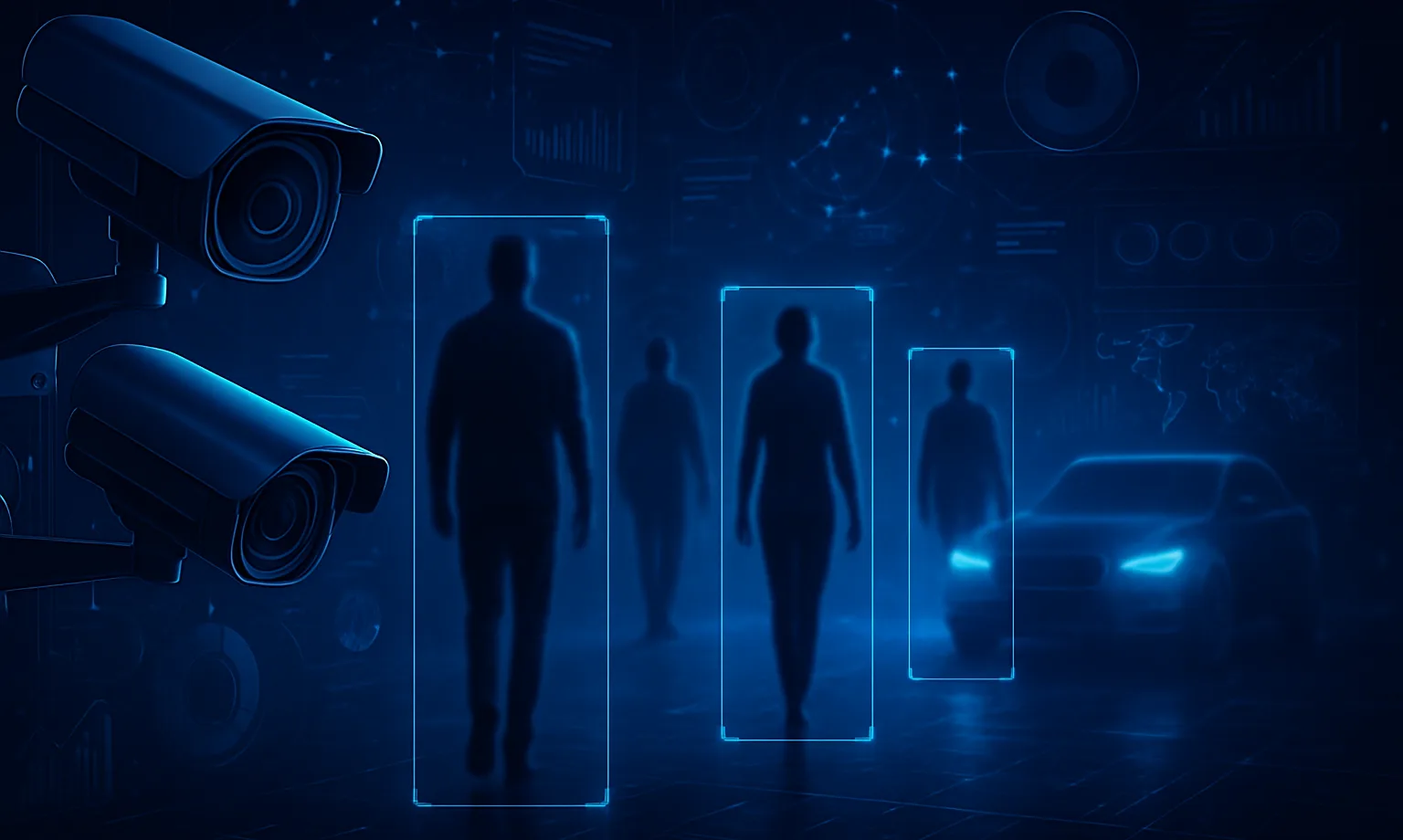
Over the past few years tens of thousands of cameras have been installed across Uzbekistan — in shops, warehouses, courtyards and on roads. In most cases, though, they work like a DVR: they record an archive that someone reviews after the fact, once something has already happened. Computer vision changes the logic: the system analyses the frame in real time and reports the event itself — it counts people, reads a plate, notices that someone has fallen or entered a restricted zone.
Technically these are neural-network detection and classification models running on top of an existing or new video stream. For a business the architecture name doesn't matter — the outcome does: video stops being a passive archive and becomes a source of data and signals you can act on automatically or build reports from.
Recognition: faces, plates, objects
The most in-demand class of tasks in Uzbekistan is recognition. It covers several distinct scenarios that often get confused:
- License plate recognition (ANPR/LPR) — entry to parking and premises, automatic barriers, vehicle accounting at warehouses or fuel stations. Works well on Uzbek plates when the camera is properly installed.
- Face recognition — access control (card-free ACS), time and attendance, black/white lists in retail. Here consent and biometric storage are the critical questions.
- Object and attribute detection — presence of helmets and protective gear on the production floor, abandoned objects, open flame and smoke, overcrowded zones.
Counting and flow analytics
Counting is the most underrated yet fastest-paying-back function. The system counts people entering a mall, customers in a checkout queue, visitors by zone, vehicles at an entrance. From these numbers comes real business analytics that simply didn't exist before.
For retail it's conversion: how many people walked in versus the number of receipts, which store zones are "hot", when the peak load occurs and whether there are enough cashiers. For food service it's queue length and wait time with automatic alerts to the manager. For public and cultural venues it's attendance tracking without turnstiles.
Security and perimeter protection
In security, video analytics removes the core problem — the human factor. An operator physically cannot watch 30 screens attentively for hours. The system, however, reacts to specific events: crossing a virtual line or perimeter, a person appearing in a zone after hours, crowd gathering, a person falling, an abandoned object, smoke.
Instead of "watching everything", the operator receives prioritised alerts and works only with those. For industrial sites, warehouses, construction and guarded premises in Uzbekistan this is the most straightforward payback scenario — it directly cuts theft, downtime and incident risk.
Retail and transport — the two liveliest markets
Retail: visitor counting and conversion, zone heat maps, queue control, shelf availability and merchandising analysis, checkout discipline control (scanning without a receipt). Pays back through revenue growth and loss reduction.
Transport and cities: vehicle counting and classification, dedicated lane and parking control, road occupancy logging, ANPR at entrances. Pays back through automation of paid zones, fines and logistics.
Both directions are growing fast in Uzbekistan right now: chain retail is digitising and cities are rolling out "smart" transport solutions. This means it is more profitable to introduce analytics while the camera infrastructure is still being designed, rather than bolting it onto chaotically mounted equipment afterwards.
How to roll it out: from pilot to system
The right path is not buying a "box" but a project built around a specific task. At OneDev we recommend this sequence:
- Define the metric. Not "install analytics" but "cut the queue to 3 minutes" or "reduce warehouse theft". Everything else follows from the metric.
- Audit the cameras. In some places the existing ones suffice; in others you need new cameras with the right angle, resolution and lighting. An infrastructure audit is a mandatory first step.
- Choose where to compute. On an edge device next to the camera, or on a server. This determines cost, latency and scalability.
- Run a pilot at 1–2 sites. Measure accuracy on real data, not on the vendor's demo. Tune the model to local conditions.
- Scale and integrate. Connect analytics to CRM, ERP, ACS and dashboards so the numbers drive decisions instead of sitting in a separate panel.
Conclusion
Video analytics in Uzbekistan has stopped being exotic and become a working tool that pays back on concrete metrics — conversion, losses, security response time, throughput. But the result comes not from "a neural network" in the abstract, but from a well-defined task, suitable cameras, the right processing architecture and careful handling of data. If you already have cameras or are only now designing the infrastructure, tell us about your task — the OneDev team will help assess what will actually pay back in your specific case and build a solution from pilot to integration.