Building Websites and Platforms for Business Growth, Not Just «Business Cards»
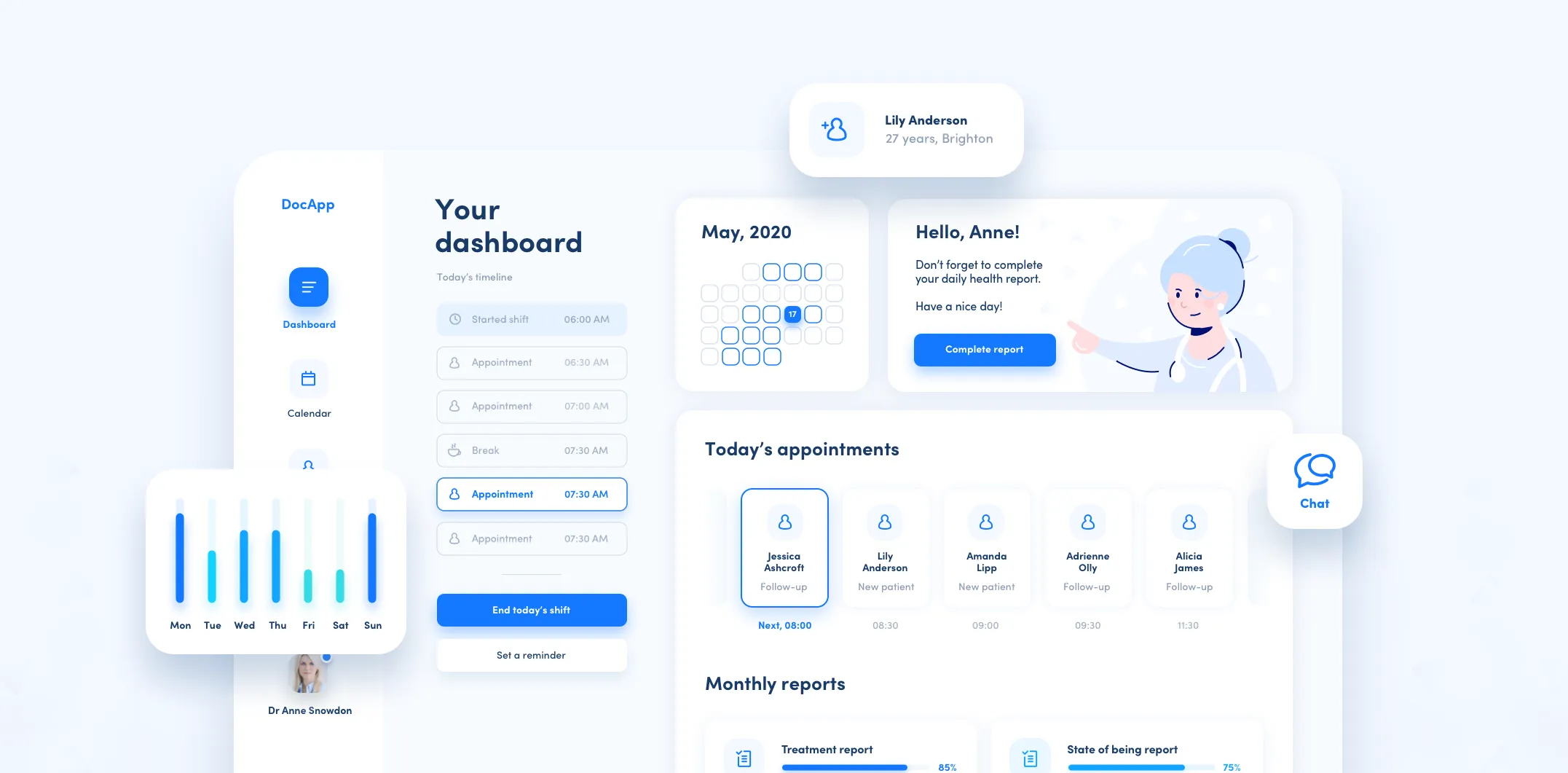
Almost every company in Uzbekistan already has a website. Yet very few of them earn anything. The link sits in the Instagram bio, occasionally gets shown to a partner, and quietly collects dust. When the marketing budget tightens, the website is the first line item nobody defends — because nobody can point to a single deal it brought in. This is the natural fate of a "business card" site: a digital brochure that exists, but does not work.
The uncomfortable truth is that there are two fundamentally different kinds of web projects, and most businesses commission the first while silently expecting the second.
Two Types of Websites — and Why People Confuse Them
The first type is the "just to have one" site. It exists so that when a client asks "do you have a website?", the answer is yes. It usually has a homepage, an "About Us" section with a stock photo of people shaking hands, a list of services written in vague corporate language, and a contact form nobody monitors. It was built quickly, cheaply, and was never tied to any commercial goal.
The second type is a growth platform. It is engineered around a specific outcome — a qualified lead, a booked consultation, a completed order, a signed contract. Every page, every button, every line of copy exists to move a visitor one step closer to that outcome. It is measured, iterated on, and treated as a sales channel rather than a decoration.
The problem is not that business-card sites are badly designed. Many of them look beautiful. The problem is that beauty and revenue are unrelated variables. A site can win a design award and still convert nobody, because conversion is a function of structure, clarity, trust, and follow-up — not gradients and animations.
Why Simple Websites Don't Generate Anything
A business-card site fails commercially for reasons that are structural, not cosmetic. Understanding them is the first step to building something that actually works.
- No clear action. The visitor lands, reads a bit, and leaves, because the page never tells them what to do next or why doing it is in their interest. There is no single, obvious next step.
- It talks about the company, not the customer. "We were founded in 2015, we are dynamic and client-oriented" answers a question nobody asked. Visitors care about their own problem, not your founding date.
- No trust signals. No real cases, no specifics, no proof. A stranger has no reason to believe a company they have never heard of.
- It is invisible. The site is not found in search, not connected to any ad source, and not promoted anywhere. A page nobody visits cannot convert anyone.
- The lead leaks. Even when someone fills the form, the request lands in an inbox checked once a week, or there is no CRM, no notification, no follow-up. The hardest part — getting a request — succeeds, and then the deal dies from neglect.
Each of these is fixable, but only if the project is conceived as a revenue tool from day one. Retrofitting commercial logic onto a finished brochure is usually more expensive than building correctly the first time.
What a Growth Platform Actually Contains
A website built for results is not a single deliverable — it is a system. The visible page is only the tip of it. Below the surface sit the components that turn attention into money.
- A defined target action and funnel. Before a single screen is designed, you name the action: a callback request, an order, a demo booking. The whole structure is then built to lead toward it.
- Messaging built on the customer's problem. The first screen answers three things in seconds: what this is, who it is for, and why it is better than the alternative the visitor is already considering.
- Proof. Concrete cases, numbers you can actually stand behind, client logos, reviews, certificates, guarantees. Trust is what converts skeptics.
- Traffic channels. SEO so the site is found organically, plus integration with paid ads, social, and other sources. A platform is designed to be fed visitors.
- Analytics. Yandex Metrica, Google Analytics, event and goal tracking. You cannot improve what you do not measure, and you cannot justify a budget you cannot prove.
- Lead handling. Forms connected to a CRM, instant Telegram or email notifications, integration with messengers. The request must reach a human while the visitor is still warm.
- Speed and mobile-first build. In Uzbekistan most traffic is mobile and often on uneven connections. A slow site loses visitors before the first screen even appears.
Growth platform: built around a target action, fed with traffic, measured continuously, leads routed into a CRM and worked — cost is treated as an investment with a tracked return.
How to Tell Which One You're Being Sold
When you talk to a studio or freelancer, the conversation itself reveals which type of project you will get. If the discussion is only about colors, sliders, and the number of pages, you are buying a brochure. If the first questions are about your customers, your average deal size, where your current clients come from, and what you want a visitor to do — you are talking to people who think in terms of results.
Ask directly: how will we measure whether this site works? Where will leads go? How will visitors find it? A team that builds for growth will have clear answers. A team that builds business cards will change the subject back to design.
This is equally true for the public sector. A government portal that merely "exists" frustrates citizens; one designed around real tasks — find information, submit a request, get a response — reduces queues, calls, and complaints. The same principle applies: structure around the user's action, then measure it.
The Mindset Shift
The single most valuable change is to stop thinking of a website as a cost and start treating it as a channel. A channel has inputs (traffic), a conversion mechanism (the site), and outputs (leads and revenue), all of which can be measured and improved. Once you see it this way, the questions change: not "how much does a website cost?" but "what does it cost to acquire one customer through it, and how do I make that number smaller?"
That reframing is what separates companies whose sites grow their business from companies whose sites just take up a line in the budget.
Build for Growth, Not for the Shelf
A website is not an item to own — it is a sales channel to operate. The difference between a brochure and a growth platform is not the design budget; it is whether the project starts from a measurable business goal and ends with leads landing in a CRM and being worked. If you are about to commission a site, or you already have one that earns nothing, talk to us at OneDev. We start every project with your business goal, design the funnel backwards from a real target action, and connect traffic, analytics, and lead handling so you can see exactly what the site brings in. Let's discuss your project and turn your website into something that actually grows the business.